
0.01% Solutions
A proposed implementation programme connecting planetary hydrological security with measurable, decentralized water-retention action.
From global principle to distributed action
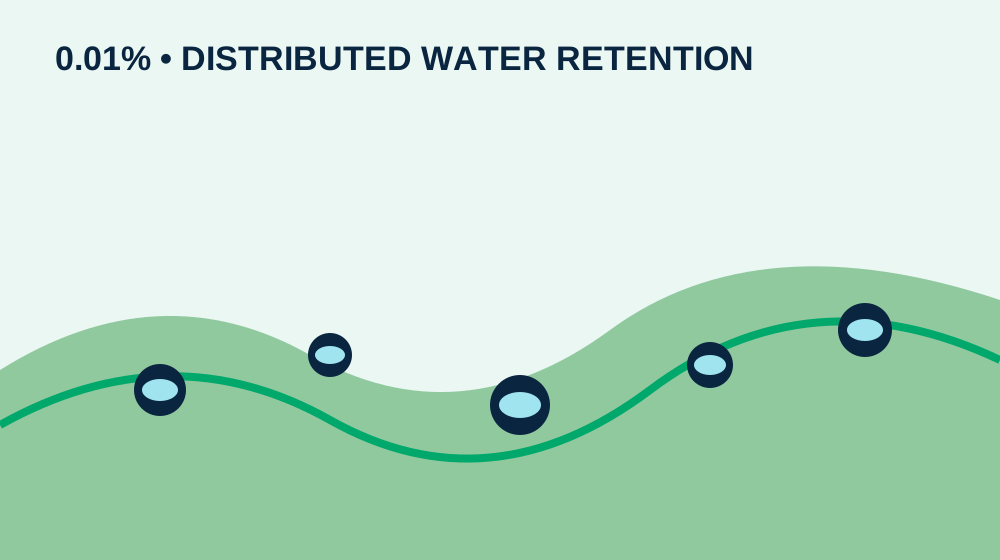
0.01% Solutions is a proposed flagship programme for retaining a small fraction of annual precipitation through distributed interventions designed according to local hydrology, ecology, land use, safety and community needs.
The central concept
The current proposal uses an indicative global aggregate target: 0.01% of annual precipitation across 197 UNCCD Parties, translating in the proposal to approximately 52 billion cubic metres per year of retained water. The calculation and country-level allocation require independent review.
Why it matters
The programme is designed around the proposition that hydrological resilience can be strengthened by retaining more water in landscapes where it can support soils, ecosystems, livelihoods and groundwater processes. It is not a substitute for emissions reduction or cryosphere protection.
How it works
- Identify hydrological and ecological leverage points.
- Design site-specific interventions.
- Implement through local and regional partnerships.
- Monitor water, land and ecological indicators.
- Evaluate, learn, adapt and scale only where evidence supports expansion.
Evidence and pilots
The proposal should be developed through field research, hydrological modelling, remote sensing, monitoring, independent review and peer-reviewed publication.
- Baseline hydrology and rainfall assessment
- Water-balance and downstream-impact assessment
- Ecological and social safeguards
- Open monitoring data where appropriate
- Independent evaluation and peer review
- Replication only after evidence of effectiveness and safety